
Before the Session Begins: Helping Children Arrive, Settle and Engage
A facilitator once told me she did not have time to include a wellbeing activity at the beginning of her session. She also felt she was not really allowed to, because she had a teaching plan she needed to follow.
As we talked, something became clear. The wellbeing practice felt like another thing to do and moreover, separate from the session she was there to deliver and potentially taking time away from it.
A wellbeing practice can easily sound like one more responsibility. But what if, instead of taking time away from the session, it helped the session begin in the way you intended?
It is not the first time I have heard this.
Teachers, teaching assistants, facilitators, early years practitioners and group leaders already have a lot to hold. There is a plan to follow, material to cover, a room to manage and children arriving with very different needs.
A wellbeing practice can easily sound like one more responsibility. But what if, instead of taking time away from the session, it helped the session begin in the way you intended?
A typical start can involve a little bit of everything. Some children arrive talking. Some wander. Others need several reminders before they are ready to begin. Someone suddenly needs the toilet and you are quietly hoping it does not create a wave of toilet-goers.
The adult may be ready to teach. The group may still be arriving.
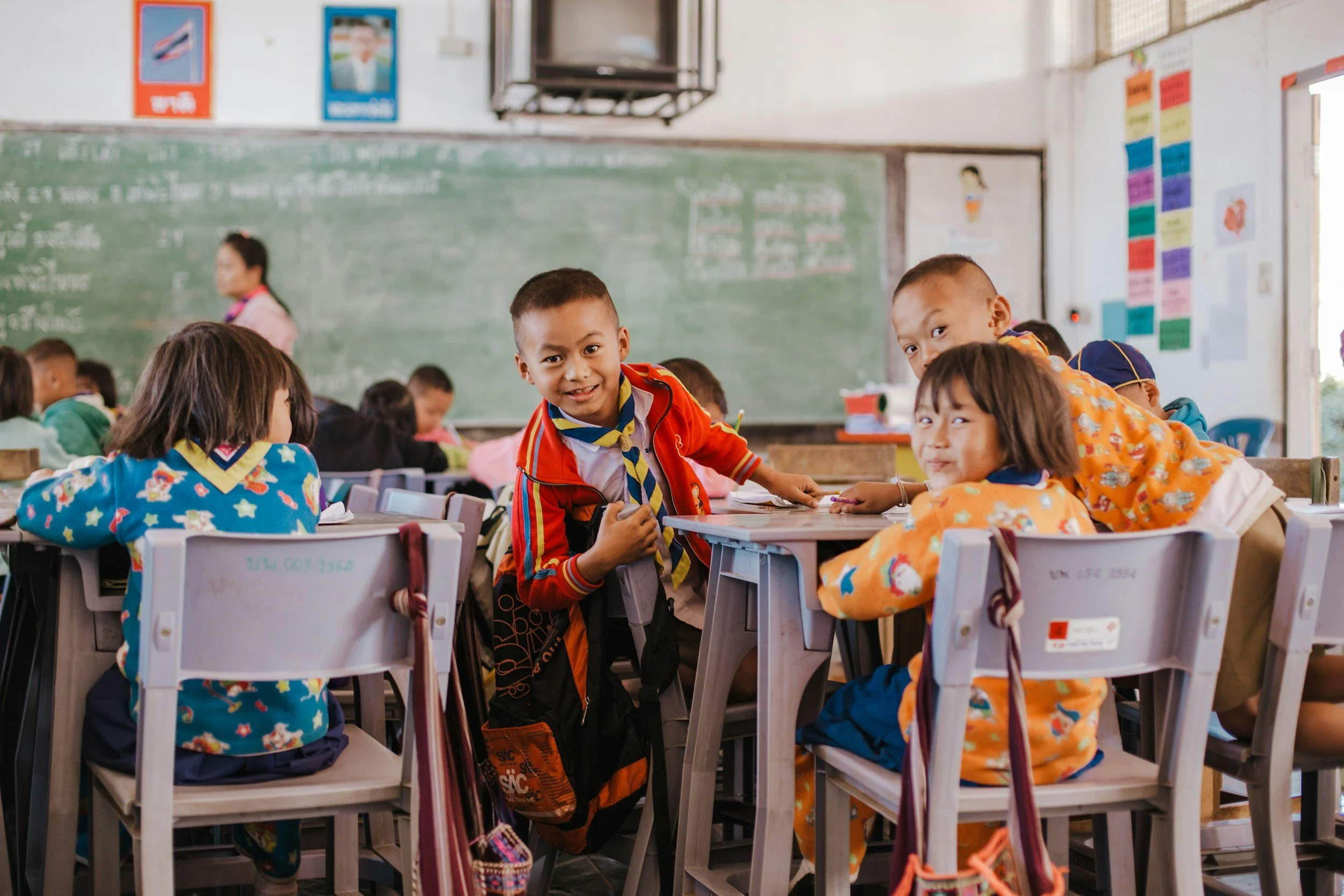
Children arrive carrying the moment before
Adults often prepare for a session by organising materials, checking the room and thinking through what they need to teach.
Children arrive carrying what came before.
They may have come from a noisy playground, another lesson, a rushed journey, an argument, an exciting conversation or a long period of sitting still.
Their bodies may be in the room before their attention is.
That is one reason the beginning of a session can feel harder than expected. There can be a gap between being present physically and being ready to take part.
A short wellbeing practice can help bridge that gap.
Start with the state of the room
The same arrival practice will not suit every group on every day. Nor will the same wellbeing tool always create the response you expect.
The useful skill is learning to notice what is happening and choosing something that might help the children move towards greater readiness for whatever comes next.
Before deciding what to do, you might notice:
Is the group carrying lots of energy?
Do they seem flat or disconnected?
Are they talking because they need connection?
Are they unsure what is expected?
Are they physically present but mentally elsewhere?
It is really a way of asking one simple question:
What would help these children become ready to take part?
A lively group may need movement before they are ready to focus. You might shake out the hands and feet, reach across the body, march on the spot or use a short sequence that gives some of that energy somewhere to go.
A low-energy group may need something very different. Mindful movement and nature connection can help spark curiosity and bring a little more life into the room — perhaps rubbing the hands together, reaching upwards, using the breath with movement or exploring a nature-inspired practice.
These are the kinds of choices we explore in MindFresh Moments: building a toolkit rather than expecting one wellbeing tool to work for every child, group or moment.
And calm is not the the goal! Sometimes what we are looking for is greater harmony: children who feel more settled within themselves, present in the room and ready to focus. On another day, readiness might look brighter, more energised or more curious.
Keep it short and let it become part of the rhythm
An arrival practice does not need to become a ten-minute lesson. Thirty seconds can be useful and the rhythm can be very simple:
Notice how the children have arrived.
Choose movement, breath, awareness or nature connection.
Keep it brief.
Move directly into the session.
For example: “Before we begin, let’s shake out the journey here. Hands, shoulders, feet. Now slow it down. Feel both feet on the floor. Look towards the space where we’ll be working. We’re ready.”
The practice becomes part of beginning rather than something added before beginning.
Repetition matters here too. When a short practice becomes familiar, children begin to recognise the rhythm. There is less explaining to do and the transition itself can gradually become easier to move through.
It helps the adult arrive too
The beginning of a session can be demanding for the person leading it.
You may be answering questions, finding materials, remembering the plan and reading the room at the same time.
A shared pause gives you a moment to arrive too.
You might notice your feet, release your shoulders, take a breath and hear the pace of your own voice.
Children are influenced by the way an adult enters a moment. Our tone, pace, movement and presence all contribute to the atmosphere we are creating together.
And you do not need to know a perfect sequence of instructions. Movement and breath can be simple and fluid. Sometimes you only need enough space to notice what is happening and choose how you want to begin.
Build wellbeing into the plan
When a short practice helps children arrive, engage and become more ready to participate, it is already supporting the purpose of the session.
It may make a transition feel more purposeful, reduce the number of instructions that need repeating or give the adult a clearer way to respond when children arrive with very different levels of energy.
You might notice the group begins more easily, transitions with less friction or returns to the activity with greater focus.
These are small shifts, but they matter.
Wellbeing does not always need its own separate slot in the timetable. Sometimes it can be woven into the way we begin, transition, regroup and move through the day. In doing so, we help children learn that moments to check in, pause, settle and arrive matter. Over time, these small repeated practices can become building blocks for healthy habits and lifelong wellbeing skills.
Research on executive function and self-regulation supports this idea too: children build these skills through repeated opportunities to practise them in everyday life.
Before your next session, ask:
What state might these children arrive in?
And then:
What might help them become ready to take part?
The answer may only take thirty seconds.
Explore MindFresh Moments and build your practical toolkit of movement, breath, awareness and nature-based tools for everyday learning.

A Mindful Moment: Arriving
Stand or sit with both feet supported.
Reach both arms upwards as you breathe in.
Let the arms float slowly back down as you breathe out.
Repeat once.
Then look around the space and silently notice:
I am here. We are beginning.