
Nature Connection Starts Where You Are
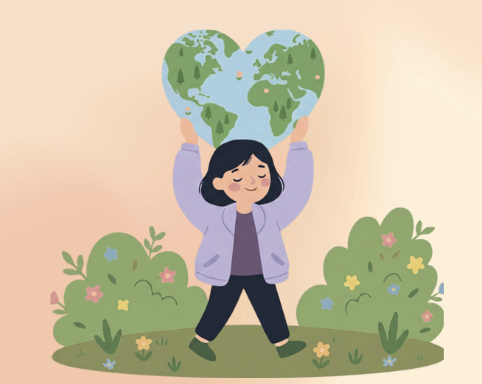
Nature connection begins with remembering that I am already part of the natural world, and paying closer attention to what is around and within me.
Some days, nature connection looks exactly as I hope it will. I go for a walk, notice the sky, stand near a tree long enough to feel that I have actually arrived, or practise mindful movement - favourites like Rainbow Dance, Wild Horse Shaking, Tiger’s Claws or Lotus Breath - that help me feel more connected to the natural world.
Other days, I realise it is late afternoon and I have been glued to a screen, or simply have not taken the time to look up and away from whatever I am doing. Those are often the days when I need nature most.
There are days when we simply do not have the time, energy or space for a long walk, but just because we have not physically gone outside does not mean nature connection is unavailable to us.
I used to think connecting with nature required me to go somewhere greener, quieter or more beautiful than wherever I happened to be. These days, I try to cultivate my relationship with nature wherever I am, tuning into my senses and allowing space for wonder, imagination and curiosity.
For me, nature connection begins with remembering that I am already part of the natural world, and paying closer attention to what is around and within me.
It can begin with simply paying attention
What has changed for me is less about finding more nature, and more about noticing what is already present with a little more care. I even try to quiet the part of my brain that wants to immediately name or identify what I am seeing. Knowing the technical name can come later. First, I want to notice the colour, shape, movement, texture or simply how it makes me feel.
Sometimes that is as simple as standing by the window with a cup of tea and actually looking, rather than glancing. I might notice the quality of the light, the shape of the sky, or how quickly the weather is changing. The view does not need to be beautiful or dramatic. What matters is that I am present enough to experience it.
That same shift can happen with something small indoors too - a shell, a leaf, a plant, a piece of wood. The object itself may be ordinary, but the act of noticing its texture, weight, colour or shape can draw me out of my head and back into the moment.
For me, this is where nature connection starts to feel like a relationship rather than an activity. It is less about collecting moments with nature and more about allowing myself to be affected by what is already here.
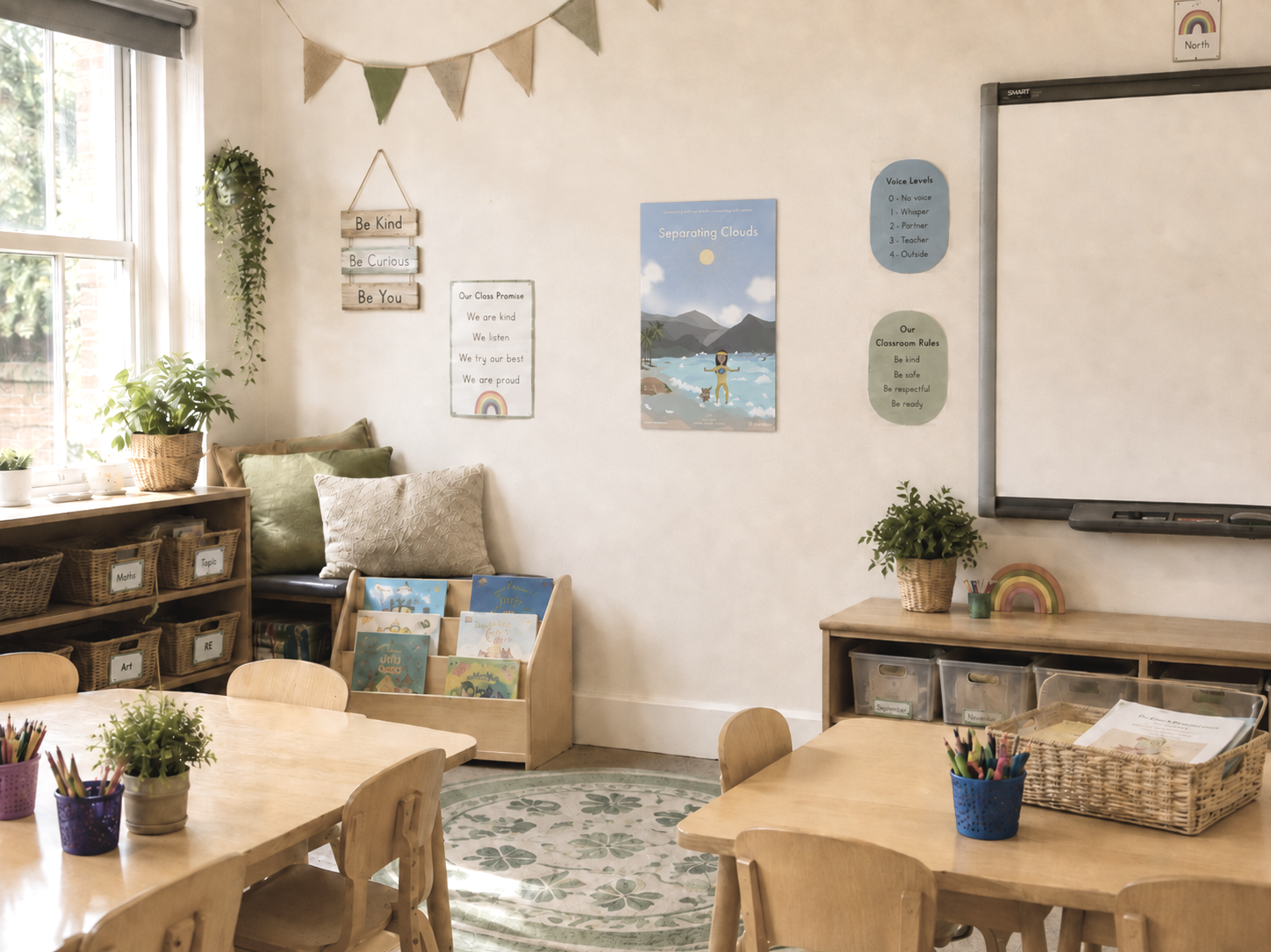
A nature-inspired classroom visual can become a simple cue to pause, move and reconnect with the natural world.
Imagine how your classroom could invite more moments of nature connection.
Visuals can offer another small doorway into nature connection. An image of a flower, an animal, the sky or a nature-inspired movement can catch my attention and invite me to pause for a moment. It might spark a memory, an imagined movement, or simply remind me to look up and notice what is around me. I find the most useful visuals are the ones that do more than decorate a space; they become gentle cues to reconnect with something we may otherwise move past.
This is one of the reasons we use nature-inspired imagery throughout our Sea Light resources — a visual can become a small prompt to notice, breathe, move or imagine.
Remembering that my body is nature
This may be the most useful part for me to return to.
I can spend an entire day thinking of nature as something outside me while not considering the nature of my own body and being. My breathing changes. My energy rises and falls. I become hungry, restless, tired or tense. I need movement and I need rest.
Sometimes I stand and stretch. Sometimes I place both feet on the floor and let my hips gently sway while my arms move in wide circles. Other times it is simply one long, slow exhale before moving onto the next thing. These small moments help me tune into my own body and notice what is happening rather than continuing straight through it.
For me, this is where nature connection starts to feel less like something I do and more like something I remember.
Imagination has its role too. Nature connection is not only about what we can physically see or touch; it can also be about the qualities we sense and imagine. A cloud can become something to reach into, a flower can invite a different kind of breath, or an animal can inspire the way we move. These small acts of imagination can make nature feel more vivid and relational, especially when we are indoors.
Research into nature connectedness suggests that the quality of our attention matters. Actively noticing everyday nature has been shown to strengthen people’s sense of connection with the natural world, beyond contact with nature alone.
That distinction matters to me because it makes nature connection much more available.
It can begin here.
With the light changing.
With a sound outside.
With the movement of the breath.
With noticing that my own body has rhythms too.
Nature connection starts within.
And the more often I remember to notice, the more naturally it begins to happen. Perhaps that is what we mean when something becomes second nature — although, in this case, perhaps it was all one nature to begin with. 😉
If you’d like to explore this idea further, read how nature connection can become part of everyday classroom life through small moments of attention, movement and noticing.
A Mindful Moment: Separating Clouds
Stand comfortably and let your arms cross softly in front of the body.
Begin to lift them upwards. As your hands reach towards the sky, imagine reaching into the clouds.
Slowly part the hands and watch the clouds separate, letting the arms open gently to either side. Keep the hands soft and the movement easy.
After a few rounds, let your arms float gently back down. Pause and notice what is here.
How does it feel to have connected with the clouds?