
A 30-Second Breath Reset That Works Mid-Lesson
You are mid-lesson. The energy in the room has shifted. Someone is restless. A small conflict has just passed. You can feel the class beginning to drift - attention fragmenting, the thread of the morning starting to fray.
You have thirty seconds.
What if thirty seconds were enough?

What a deep breath actually does
We have been told to take a deep breath in moments of stress for as long as most of us can remember. But the instruction is often given without the explanation, and the explanation is worth knowing because it changes the way you offer it to a child.
When we breathe slowly and deeply, we support the body’s ability to settle. One reason for this is the vagus nerve: the long, wandering nerve that helps connect the brain with the heart, lungs and digestive system. It is a key part of the parasympathetic nervous system, the branch associated with rest, recovery and returning to balance.
A slow exhale in particular can signal safety to the nervous system. It gives the body a cue that it can begin to stand down. Heart rate may slow. The body can start to move out of high alert. The prefrontal cortex — the part of the brain involved in thinking, decision-making and learning — becomes easier to access again.
This can happen quickly. Not always perfectly. Not always dramatically. But quickly enough for a classroom to feel the difference.
When breath meets movement
A single deep breath is powerful. When breath is paired with gentle, mindful movement, something even more useful can happen.
Movement gives the body somewhere to put its energy. Breath gives the nervous system a steady rhythm to return to. Together, they offer a brief reset — physical enough for children to feel, simple enough to use in the middle of a lesson, and gentle enough to help the body move back toward balance.
This is one of the core principles of qigong, a practice that has understood the relationship between breath, movement and inner harmony for thousands of years. It is also one of the principles behind Nature Flow, Sea Light’s award-winning children’s mindful movement book, which weaves breath and movement together through nature imagery and simple, flowing sequences.
You do not need to teach qigong to use this principle. You just need a moment, a breath, and a small invitation to move.
What if teachers learned the tools that help us regulate
The power of nature as an anchor
There is a third element worth naming: nature.
Research increasingly supports what many of us feel instinctively - that connecting with the natural world, even briefly and even through imagery or memory, can have a calming effect on the nervous system. The brain responds to nature not just when we are outside in it, but when we bring it to mind.
This is why the tools in both Nature Flow and the MindFresh Moments training course use nature as a constant reference point. Asking a child to breathe like a tree in the wind, or to feel the steadiness of a mountain beneath their feet, is not whimsy. It is a deliberate use of the nervous system’s responsiveness to natural imagery, offering an anchor that brings the mind into the present moment gently, without effort.
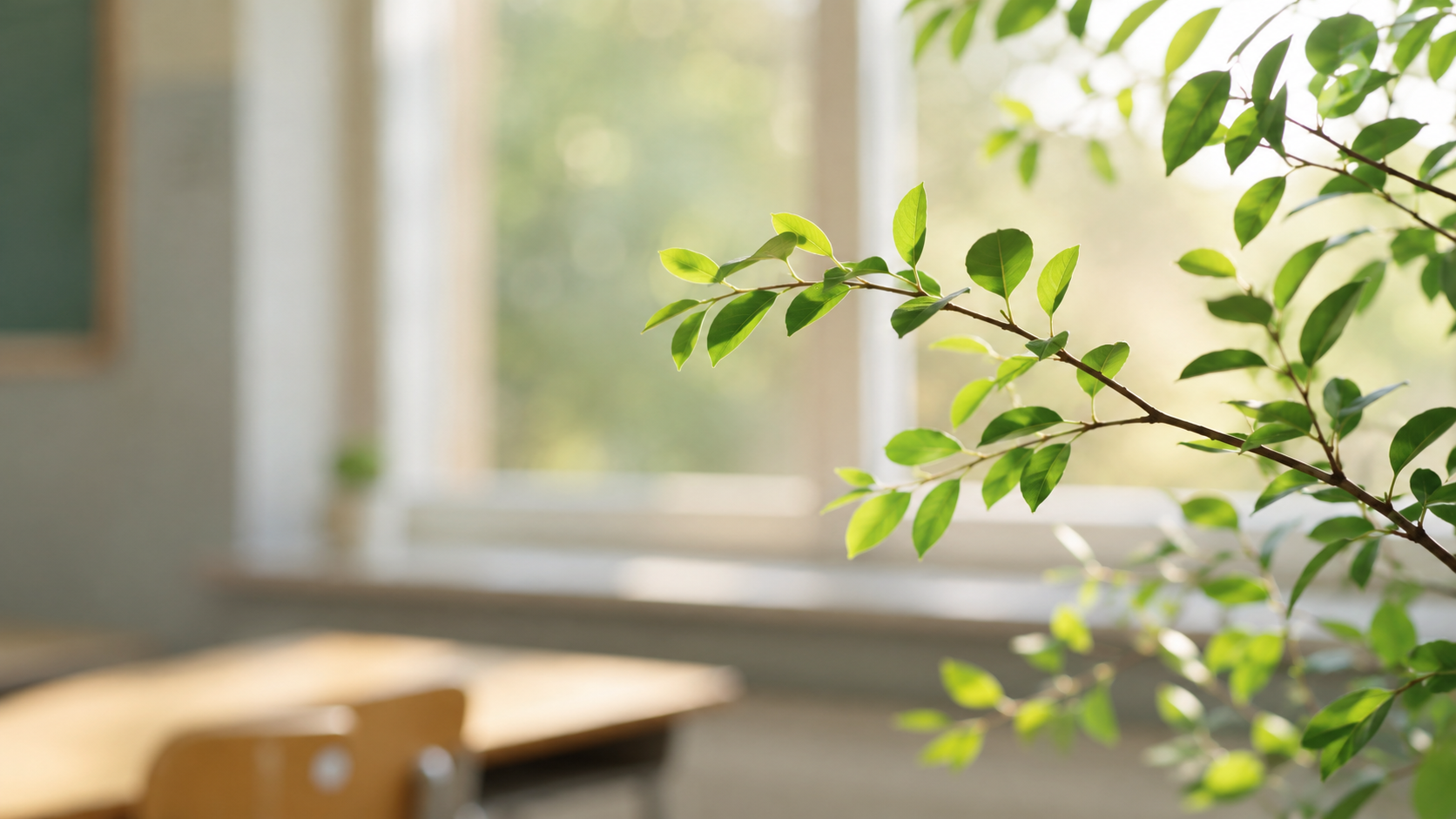
Nature connection is not always about going somewhere. It can begin with memory, imagination, a classroom plant, a leaf by the window, or the simplest invitation to notice the world around us.
A moment to pause, notice and return
Mindful Moment
Here is one you can use right now, in a classroom, at your desk, or before you walk back into a room.
Stand with your feet hip-width apart, or sit with both feet on the floor.
Take a slow breath in through the nose for a count of three. Imagine your arms are branches rising gently with the in-breath.
Hold gently for a count of two.
Exhale slowly through the mouth as long as you can. Let the arms float back down, like leaves settling.
Repeat three times.
That is it. Thirty seconds. The nervous system notices.
Making it a habit
The real power of a breath reset is not in a single use. It is in repetition. When children practise a simple breath tool regularly, it becomes part of their internal toolkit. They begin to reach for it themselves in moments when they need it, without being asked.
This is self-regulation developing in real time. A healthy habit forming quietly, through ordinary moments in the school day.
A deep breath before writing.
One group mindful movement after playtime.
Fostering a pause before a transition.
Share a reset when the room begins to feel scattered.
These are small practices, but they give children something they can return to again and again.
Begin building your classroom regulation toolkit with MindFresh Moments.