
Why Mindfulness Is More Than Sitting Still
Close your eyes for a moment. Think of the word mindfulness. What do you see?
For most of us, the image arrives quickly: someone seated cross-legged, hands resting gently in their lap, eyes closed, expression serene. Perhaps there is soft music. Perhaps there is a candle. The room is quiet. The mind is - somehow - empty.
It is a peaceful image. It is also, for many people, an impossible one. And for children in a primary classroom, it can feel almost laughably remote from the reality of their day.
But mindfulness was never only this. Some of its most powerful expressions involve not stillness at all, but movement.
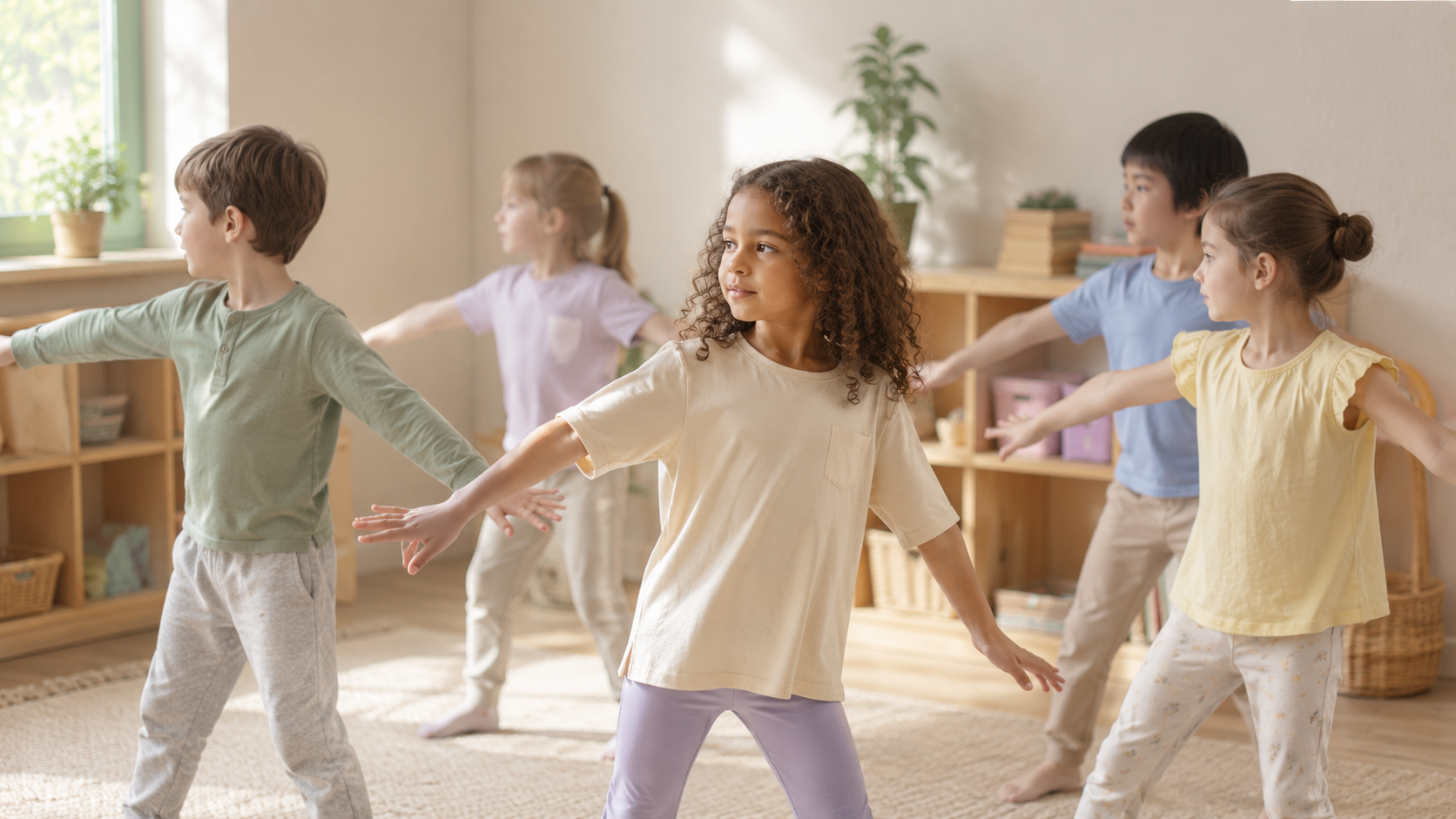
What mindfulness actually is
At its core, mindfulness is the practice of bringing gentle, non-judgmental attention to the present moment. It is noticing what is here - in the body, in the breath, in the senses - without trying to change it or push it away.
This quality of attention can be cultivated in stillness. It can also be cultivated in movement. For many people, and for many children, movement is the more accessible doorway.
The body was always part of mindfulness
For thousands of years, movement has been understood as a path to harmony in the body and the mind.
Qigong, the ancient Chinese practice of flowing movement, breath, and intention, has long worked with the understanding that the body and mind are not separate, and that gentle, conscious movement can bring both into balance.
Yoga, rooted in the same principle, uses posture, breath, and awareness as a unified practice. Both traditions understood something that Western science is now confirming: the body is not a vehicle for carrying the brain around. It is part of the mind itself.
Nature Flow was Sea Light’s first creation: an award-winning children’s wellbeing book inspired by qigong, yoga, mindfulness, and the natural world. Through simple movement and breath, it gives children and adults an easy way to pause, connect, and return to themselves — with no equipment or prior experience needed.

You do not have to be still to be present.
You just have to be here.
What mindful movement actually means
Mindful movement is movement practised with awareness. The attention is gently directed toward what is happening in the body: the sensation of a stretch, the rhythm of a breath, the feeling of feet on the floor. The mind is not empty. It is present.
In qigong, there is a beautiful concept: seeking movement in stillness, and stillness in movement.
Even what appears to be a stationary pose is dynamic. The breath moves, the attention moves, subtle shifts happen throughout the body. What looks like stillness from the outside is, in fact, alive with presence.
This reframes the idea of what it means to be still. It opens a door for children who struggle to sit quietly, because mindful movement says: you do not have to be still to be present. You just have to be here.
Movement, regulation and learning
Mindful movement is more than a pleasant pause in the day. When children move with awareness, especially when movement is paired with conscious breathing, they are practising skills that support attention, self-regulation and learning.
These skills matter because learning does not only depend on what children are taught. It also depends on their ability to focus, remember instructions, manage impulses, shift between tasks and stay with something that feels challenging. Harvard’s Center on the Developing Child describes executive function and self-regulation as skills that help us manage information, make decisions and plan ahead.
A slow breath, a gentle stretch, the feeling of feet on the floor — these small experiences help bring attention back into the body. Where stress can make the body tighten and the mind scatter, mindful movement offers a way back to steadiness.
For children who arrive at school carrying the weight of a difficult morning, or who have simply been sitting still for longer than their nervous systems can comfortably sustain, a few minutes of mindful movement can genuinely shift the internal landscape. It is not a distraction. It is a reset.
The science of yoga, qigong and mindfulness all point in the same direction: when we move with intention and breathe with awareness, we help the nervous system find its way back to balance — and create better conditions for learning.

A moment to pause, notice and return
Mindful Moment
Invite the children to stand or sit with both feet on the floor.
Ask them to become very still, but to notice that stillness is not empty. The breath is moving. The body is gently balancing. The heart is beating. The hands may feel warm, cool, heavy, or light.
Then invite one slow movement.
Ask the children to lift their hands gently, as though they are holding a soft, fluffy cloud.
Let the cloud rise with the in-breath.
Then, as they breathe out, let the hands soften and float back down, releasing the cloud slowly into the air.
This is mindfulness too.
Movement every hour: why it matters
Research into attention and learning suggests that the brain benefits from movement breaks, and these breaks do not need to be long to be useful. Even brief periods of mindful movement, woven into the school day at regular intervals, can support memory, focus, and emotional regulation.
For many classrooms, this might mean offering a short movement reset every hour, or whenever the energy in the room begins to shift. The point is not to follow a perfect schedule, but to notice when the body and mind need support.
When we know this, the question becomes less about whether to include movement in the school day, and more about how. Ancient wisdom and contemporary science both offer a similar answer: make it mindful. Make it intentional. Make it part of how children learn to inhabit their bodies and their minds.
Mindful movement as a wellbeing tool
Mindful movement can be simple enough to use in the middle of an ordinary school day. A little space, a few seconds of attention, and one gentle invitation to move are often enough to begin.
If you’d like more simple ways to bring breath, movement, and nature connection into the classroom, explore Nature Flow and our classroom resources at sealight.life/resources.