
Why Regulation Comes Before Learning
It is 9am. Three children arrived dysregulated. One hasn’t eaten. Another had a difficult morning at home. A third is quietly holding something in that you can’t quite name yet. And you are being asked to begin a lesson on fractions.
Any teacher reading this knows the feeling. You can have the best lesson plan in the world and still find yourself going nowhere. You know your children are capable - it’s just that something is getting in the way, and you need that something to happen first.
That something is regulation.

What regulation actually means
Regulation is the ability of the nervous system to return to a state of balance after stress, challenge, or stimulation. It is not about being calm in the passive sense. It is about being settled enough to think, to feel, to connect, and to learn.
When we talk about self-regulation, we mean the developing capacity to notice what is happening inside us and to find our way back to balance. In children, this capacity is still forming. The brain regions responsible for emotional regulation - particularly the prefrontal cortex - are not fully developed until the mid-twenties. Children are not choosing to be dysregulated. They are working with a nervous system that is still learning how to manage itself.
While many may innocently think it’s a behaviour problem - “they’re being so disruptive today” - it is often a developmental reality. And it has profound implications for how we structure the school day.
What the science tells us about the brain and learning
Neuroscience is increasingly clear on this: the brain does not learn effectively when it is in a heightened state of stress. When the nervous system detects threat - whether real or perceived - it activates the fight, flight, or freeze response. The body prepares to protect itself. Cortisol and adrenaline may rise. Attention narrows. Energy is directed toward survival processes rather than the higher-order thinking needed for learning.
In this state, the very areas we need for learning become less accessible. Memory can be affected. Problem-solving narrows. Creativity becomes harder to reach. The child who appears switched off, resistant, or disruptive may simply be a child whose nervous system has not yet found its way back to balance.
We cannot pour learning into a dysregulated brain. We have to help the nervous system settle first - and that may take a matter of moments, not a whole lesson.
The good news is that regulation is not a fixed state. It is responsive. And it can be supported quickly, practically, and without disrupting the flow of a school day.
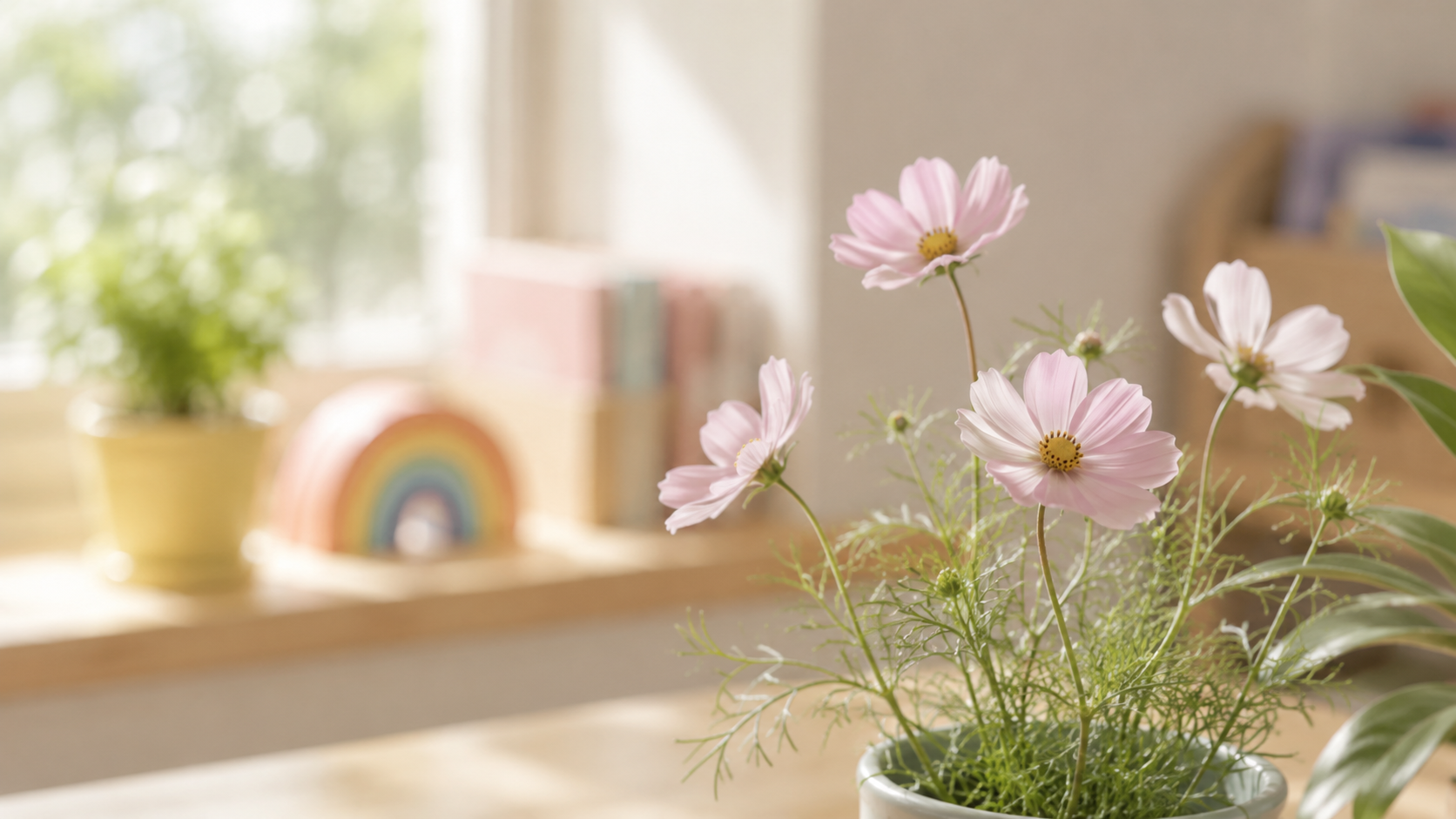
We cannot pour learning into a dysregulated brain.
We have to help the nervous system settle first.
Regulation as a skill, not a given
One of the most important shifts in thinking about wellbeing in primary education is this: regulation is a skill that can be taught, practised, and strengthened over time.
Like any skill, it develops through repetition and through having the right conditions to practise. Children who are regularly supported to notice their internal state - and offered simple tools to help them return to balance - begin to build what we might call a regulation vocabulary. They learn to name what they feel. They learn that feelings move and change. They learn that they have some agency over how their body and mind respond.
This is not a therapeutic intervention. It is preventative, upstream work. It is the kind of thing that happens in a classroom where a trusted adult has the tools and the understanding to offer a moment of movement, breath, or nature connection before the lesson begins - woven into the way the day is held.
A moment to pause, notice and return
…
Mindful Moment
Before moving into the next lesson, invite the children to place both feet on the floor.
Ask them to notice one thing they can feel right now: their feet on the ground, their hands on the table, their breath moving, or the chair holding them.
Take one slow breath together.
That is enough.
Why this matters for teachers too
Teachers have a powerful influence on the emotional climate of a classroom. Their tone, pace, breath, presence and responses all shape what children feel around them. This is not about being perfectly calm all the time. It is about recognising that the adult in the room can help guide the room back toward steadiness.
This is where co-regulation matters. Children do not learn self-regulation in isolation. They learn it through repeated experiences with adults who model, guide and practise it alongside them. A teacher who pauses, breathes, softens their pace, or reaches for a simple movement reset is showing children what regulation can look like in real time.
That means a teacher’s own wellbeing tools are not separate from the children’s wellbeing. A breath reset, a moment of mindful movement, or a brief pause to shake off stressful thoughts before continuing the lesson can support the adult first — and then ripple into the classroom.
Wellbeing in the classroom begins with the adults in it. When educators practise regulation for themselves, they also become better able to guide it for the children in their care.
Small moments, significant change
Regulation support does not require a dedicated lesson or a restructured timetable. Research increasingly supports the idea that brief, consistent wellbeing tools - a few moments of mindful movement, a single deep breath, a guided pause - can help shift the nervous system toward balance.
These small moments are simple by design: nature-inspired, rooted in ancient practices, and supported by what modern science tells us about the nervous system. They do not need special equipment or a quiet room. They are tools a teacher can reach for in the middle of an ordinary school day, without stopping everything.
When children learn to regulate - and when the adults around them understand why it matters - something shifts in the classroom. Not dramatically, not all at once. But steadily, noticeably, and in ways that ripple far beyond the school day.
Discover simple regulation tools for everyday classroom life.